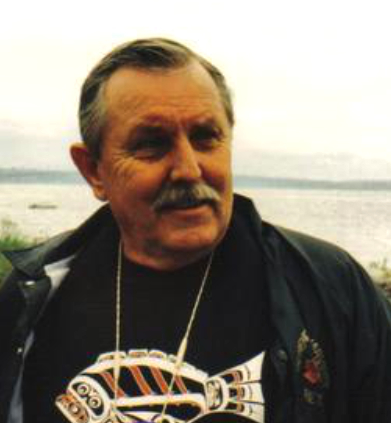
The man at the microphone
For more than thirty years, Don P walked to microphones in meeting halls, hotel ballrooms, hospitals, prisons, workshops, and conference rooms and began almost the same way.
“My name is Don, and I am an alcoholic. And I am a member of Alcoholics Anonymous.”
The repetition was deliberate. However far he traveled, whatever service title he had held, he wanted the audience to understand that he stood among them as a member—not as a professional authority and not as a recovered celebrity.
He was a memorable speaker. He could be profane, mischievous, tender, and startlingly direct in the span of a minute. He teased chairpeople, mocked his own ego, and exposed the absurd bargains of addiction. Beneath the comedy ran a grave purpose. Alcoholism, as he understood it, was a life-and-death condition, and recovery required more than abstinence. A person had to be changed: moved from isolation into relationship, from self-management into reliance, and from consuming life into serving it.
That conviction grew out of his own history. Don’s story was never simply that a bad man became good. He described a frightened, alienated boy who learned to counterfeit belonging, then used alcohol and drugs to quiet fear, then constructed an increasingly elaborate life around escape. Recovery began when the escape routes closed.
A functional home and a child apart
Don grew up in and around Denver in a family he later described as functional and loving. His parents remained married for sixty-six years. He remembered his father as exceptionally intelligent, principled, and beloved in the community, and his mother as a durable family center who lived into her nineties. A brother became a professor of music at the University of Colorado in Denver. In later life Don spoke warmly of crowded family gatherings, nieces and nephews, children, grandchildren, and great-grandchildren.
Yet the child inside that family felt like an outsider. Don repeatedly called himself a misfit and an alien. He feared that whatever he said or did next would be wrong. Rather than develop an inner sense of how to live, he studied the expectations of whoever stood in front of him. He learned one person’s rules, then another’s, and became confused when those worlds met. This talent for adaptation would later help him sell, manipulate, and survive; it also left him without a stable self.
He tasted homemade beer at eleven and became violently sick. At fifteen he drank again and established the pattern he said lasted until age thirty-four: he tried to take all that was available and got sick, then sicker. Alcohol did something valuable at first. It suspended fear. It let him imagine that he was tough, charming, or at ease. The effect mattered more to him than reality.
In high school he joined a loose group of boys who also seemed not to belong. They drove along Colfax Avenue with as much beer as they could obtain, looking for girls and for a feeling they could not name. During his senior year, unable to tolerate school, family concern, or his own mounting disorder, Don left and joined the Navy at seventeen. He dressed the flight in patriotic language—he would save America and return a hero—but later understood it as another run from pressure.
Work, family, and a collapsing performance
Don married and had two sons. Their mother, whom he also described as alcoholic, left when the boys were very young, and Don became their primary parent. He wanted intensely to be a good father and to hold a family together. The desire was sincere; his capacity was impaired. In one of the most painful conclusions of his story, he said that his best efforts eventually put him in a cage and his children in foster care.
He could be persuasive and productive when chemically supported. He sold insurance for Security Benefit Life, a debit company based in Topeka, Kansas. For a time he sold well. Then he began using money he had collected to cover immediate bills, hoping to replace it before the accounts were reconciled. When exposure approached, he resigned and ran toward what he called a bigger and better job. He went to Kansas City and worked around an IBM training operation. Across the recordings, jobs and cities change in the telling’s foreground, but the mechanism remains constant: charm, ambition, concealment, crisis, departure.
Eventually he became involved in a fraudulent enterprise in which he worked largely alone and helped take money from people who trusted the appearance he presented. The people who had hired him turned him in. Don’s telling does not ask the listener to admire the cleverness. He returns instead to the human damage: parents used again, customers deceived, children made unsafe, and every intimate relationship pressed into service of his need to continue.
December 26, 1967
By 1966 Don had returned to Denver. A multi-day run ended with him waking in a padded cell in the Boulder County jail, unable to remember how he had arrived. Psychological evaluation did not produce the escape he wanted. His family’s boundaries hardened. Despair deepened until, on December 26, 1967, he took a large supply of drugs, injected them, drank what was in the house, and lay down intending to die.
He lived. More astonishing to him, he later said, was that from that date he never again experienced a thought of taking a drink, pill, or fix. He regarded the removal of the obsession as a free gift from God, not as evidence of willpower. That distinction remained the foundation of his recovery language for the rest of his life.
Freedom from the immediate obsession did not instantly restore his life. He was arrested, detoxed in the Denver County Jail, and spent roughly five and a half months there while criminal cases and treatment possibilities were sorted out. He was considered for transfer to a federal hospital in Fort Worth, Texas. Instead, through a sequence Don described as improbable and providential, he entered the Colorado prison system. What looked like the final confirmation of failure became the setting in which he learned how to live.
A school inside prison
In prison Don encountered an AA group and a structured Twelve Step study school. Participation cost the men weekend recreation and yard privileges. They worked through the book Alcoholics Anonymous slowly and concretely, not as literature to admire but as instructions to carry out. The prison itself supplied an unforgettable backdrop: power, threat, routine, and confinement made it impossible to confuse spiritual language with sentimentality.
Three men—Bruce, Phil, and Roy—became Don’s early guides. Bruce was serving a life sentence for a double murder committed during a teenage alcoholic rage. Their circumstances were radically different, but Don saw in these men a kind of freedom he did not possess. They did not offer admiration or endless analysis. They gave him tasks, demanded honesty, and insisted that he become responsible for the next person.
Don learned sponsorship there as an action. In his later formulation, sponsorship was not principally advice about jobs, romances, or moods. It was taking another person through a proven process capable of awakening that person to a spiritual life. Once Don had been carried through the Steps, the school gave him newcomers to help. Service was not a prize for becoming well; it was part of how wellness was maintained.
Release posed a new problem. Don knew how to live in prison; he did not know how to live outside it. His sponsors made the transition practical. He needed work immediately. He considered a hamburger job in Aurora, then approached Dickson Paper Company in Denver. The company initially told him it did not hire former prisoners. A small opening became temporary work, temporary work became dock work, and dock work became the basis of a respectable working life. Don remembered driving a delivery truck to print shops in downtown Denver and the dignity of being able to make financial amends with earned money.
The larger restoration came by accumulation. He reported, showed up, accepted correction, stayed near his group, and worked with newcomers. Approximately five months after his sobriety date, he entered the wider fellowship of Alcoholics Anonymous. He never treated AA as a place merely to attend. A home group gave him a home base, a set of relationships, and work that could not be performed alone.
Home groups, family, and an enlarged life
The recordings trace Don through several home-group descriptions: an early prison group; an Aurora Tuesday-night group; the Denver Thursday Night Group; the Southern Pines Big Book Group during a period in North Carolina; and, later, a simply named AA Group meeting early Friday mornings in a community-corrections or hospital setting. The names changed with geography and circumstance. The principle did not. The home group was where he was simply a member, where people knew him, and where service was ordinary rather than theatrical.
Recovery gave Don a new chance at family life, though not an easy erasure of the past. He spoke of making direct amends to his father and of becoming close to him before his death. He learned to be present for his mother and extended family. He acknowledged the injuries his illness had caused his sons without claiming that sobriety made the history disappear.
By the late 1970s Don had married the woman who became his long-term partner; in 2003–04 he said they had been married twenty-seven years. She was a nurse who worked in research settings with critically ill babies. Don admired her ability to love without trying to control outcomes. Together they built a crowded family world. He referred to raising seven children, to stepchildren as well as sons, and later to grandchildren and great-grandchildren. In his final recorded years, grandchildren often supplied the stories through which he explained patience, humility, and wonder.
Service beyond the meeting room
Don’s service widened from prisons and hospitals into the formal structure of Alcoholics Anonymous. He served on an area committee, became Colorado’s area delegate, participated in the General Service Conference, and served four years as a trustee-at-large on the General Service Board. He spoke about these roles with gratitude and irreverence. Titles mattered only insofar as they connected groups and carried the message; none made him more than a member.
His trustee years made him a traveler on a remarkable scale. In one early-1980s talk he estimated that he had traveled about 80,000 miles in the previous year. Across the archive he mentions work and fellowship in the United States and Canada, Puerto Rico, Japan, Russia, Korea, Australia, and elsewhere. He took part in the emergence of AA contacts in Moscow in 1988 and later helped host Russians visiting the United States to learn how Americans addressed alcoholism. He returned to Japan for AA anniversaries, turning the site of his youthful imprisonment into a place of kinship.
Travel enlarged his sense of belonging. The boy who had felt alien everywhere became a man who could enter distant rooms and find family. He corresponded with people across countries, carried names and stories from one community to another, and told audiences that there were few places left where he did not know someone. His internationalism was never abstract. It was built from meals, meetings, interpreters, rides, misunderstandings, laughter, and the discovery of common suffering.
This narrative was synthesized from 82 surviving Don P recordings spanning 1972–2005. The archive transcripts are automated, time-coded drafts; uncertain names and isolated details have been treated conservatively.